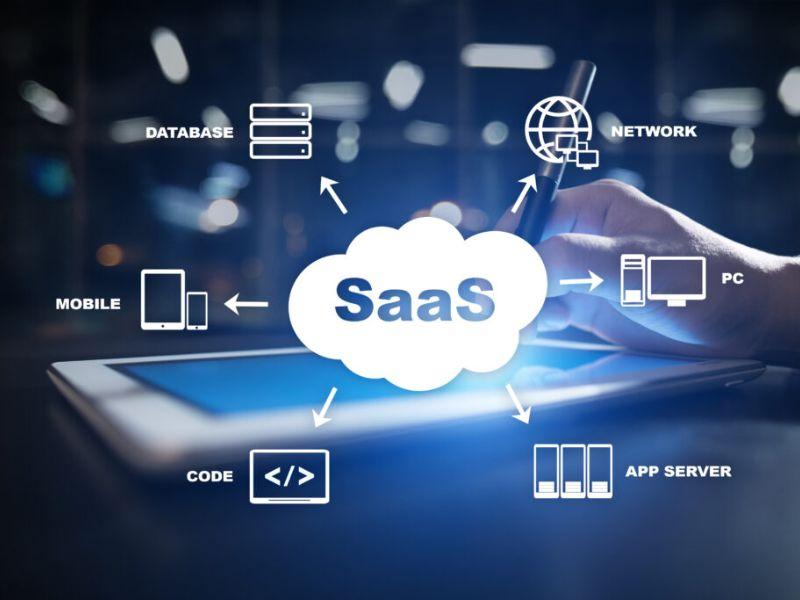
As the name itself suggests, SaaS accounting is utilized by businesses specifically for their accounting operations. This stands in contrast to traditional accounting.
If you are considering adopting SaaS accounting for your business, you should gather information about it from various sources perhaps after conducting an online search.
What is SaaS Accounting
SaaS accounting is designed for subscription-based businesses that manage revenue recognition, financial transactions, and the classification of expenses.
SaaS accounting plays a crucial role in managing the finances of businesses that provide software on a subscription basis. This approach differs from traditional accounting, wherein revenue is recorded at the time of sale instead, it accurately reflects the financial position of the business. Furthermore, SaaS accounting assists in handling deferred revenue and recurring revenue.
Advertisement :
Principles of SaaS Accounting
To accurately record financial transactions, SaaS accounting adheres to certain principles, which are as follows-
- Key Accounting Types
- Revenue Recognition and Deferred Revenues
- Expense Management and Categorization
Types of SaaS Accounting
There are primarily two types of SaaS accounting: cash basis or accrual basis
Cash-basis Accounting
The first type of SaaS accounting is the cash accounting method. Under this method, revenue and expenses are recorded precisely at the time the cash is received or paid out.
For instance, if a customer makes an advance payment, a SaaS company utilizing cash accounting immediately records that advance amount as revenue. Cash accounting is a suitable option for businesses that have recently launched as startups or are small-scale enterprises.
In cash-based accounting, there are no accounts receivable or accounts payable. Only those revenues and expenses are recorded for which payment has actually been made. This is the best option for any business seeking an accounting method that is easy to manage.
Accrual Accounting
The second type of SaaS accounting is Accrual Accounting. In this method, revenue and expenses are accounted for differently. Revenue is recorded when earned, and expenses are recorded whenever cash is received or paid. Revenue is recorded only upon the provision of services to customers. This is in contrast to cash-based accounting. Under this method, advance payments are not recorded as revenue at the time they are received.
In the previous example, the 24-month advance payment was recorded at the time of receipt; under accrual accounting, $3,000 will be recorded as revenue each month, while the remaining balance will be recorded on the balance sheet as deferred revenue. This is the best option for companies that follow GAAP or IFRS. Accrual accounting is more complex than cash-basis accounting.
SaaS Accounting Metric
SaaS metrics provide accurate insights into growth, cash flow, customer retention, and the overall health of the business. Companies that adopt SaaS accounting should keep a close watch on the metrics listed below. These metrics are as follows:
Bookings
The contract value and duration can be determined from the booking—that is, the amount the customer deposits in advance for your services. In SaaS accounting, future revenue growth is projected through bookings.
Billings
By monitoring billing metrics, a SaaS company can forecast future cash flow and gain insights into its sales performance. "Billing" refers to the amount collected from customers. An increase in billing indicates future revenue growth.
Revenue
This metric represents revenue recognized in accordance with GAAP/IFRS. In this context, and in accordance with accounting standards, deferred revenue liabilities may be converted into earned revenue upon the fulfillment of obligations. Revenue serves as the basis for profit calculation and comparative analysis within financial reporting.
Monthly recurring revenue (MRR)
The key metric for SaaS is MRR. It serves as the foundation for monitoring the business's progress and growth. MRR is analyzed using the Waterfall method; this involves categorizing revenue into expansion, contraction, and new business segments to provide insights into the increases and decreases in MRR.
Churn rate
The churn rate determines the percentage of your business that is lost when customers stop using your product. It tracks the rate of customer attrition.
Revenue recognition guidelines as per ASC 606
The ASC 606 guidelines provide businesses with a 5-step model for revenue recognition, outlined below:
- Identifying the contract with the customer
- Identifying performance obligations in the contract
- Determining the transaction price
- Allocating the transaction price to performance obligations
- Recognize revenue as performance obligations are satisfied
Benefits of SaaS Accounting
Adopting SaaS accounting software in a business offers numerous benefits, which are outlined below:
- The primary benefit of SaaS accounting software is that it provides accurate insights into your business's actual revenue.
- It facilitates timely, accurate, and precise financial reporting, thereby enabling the business to make sound decisions.
- Global regulations are adhered to, and the company's requirements in global markets are met by following ASC 606 or IFRS 15 standards.
- SaaS accounting is highly regulated and balanced, offering minimal scope for manipulation or fraud.
- In SaaS accounting, comprehensive records of income and expenses are meticulously maintained.
- Its cash flow management is excellent, providing accurate insights by clearly distinguishing between revenue and expenditure.
- One of its key benefits is that, through proper revenue recognition, it effectively enhances payroll management.
- As a SaaS business expands, it is able to scale efficiently supported by a robust accounting system without requiring a proportional increase in its workforce.
Challenges of SaaS Accounting
The challenges of SaaS accounting are listed below:
- Revenue Recognition
- Subscription Accounting
- Deferred Revenue
- Expense Management
- Sales Tax Compliance
Source: