
10 Foods You Shouldn’t Store in the Refrigerator
Advertisement :
Let’s be honest, many people have a common habit of coming home from the grocery store and immediately putting a large portion of their purchases in the refrigerator. We often assume that keeping food chilled will help it stay fresh for longer.
Sometimes, though, it may simply be because we are too tired to think about where everything should actually be stored. Either way, it’s a habit many of us can relate to.
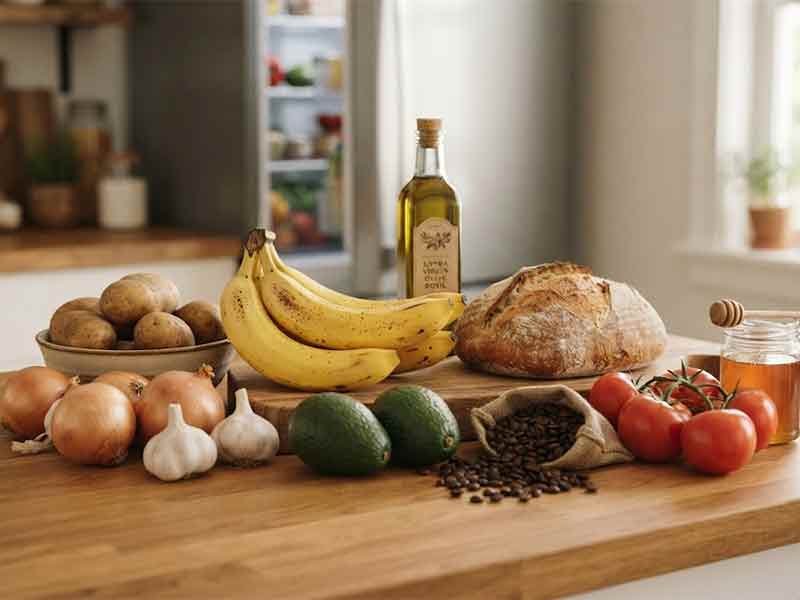
However, we don’t always stop to consider whether refrigeration is truly the best option for every type of food. While storing certain foods in the fridge can preserve them and extend their shelf life, it may also affect their flavor, texture, or overall quality. So, is refrigeration always the better choice?
1. Bananas
Bananas are a common fruit you shouldn't store in the refrigerator. When placed at room temperature, they retain their nutrients much better. Putting bananas in the refrigerator can cause their ripening process to slow down. They also develop black spots that are actually good for you because they have minerals and vitamins necessary for your body’s immune system.
2. Olive Oil
Olive Oil tends to condense and harden into a more gel-like form when it is placed in the fridge. So next time, you should not store it in the refrigerator. If you store it in the fridge, it is impossible to return it to its natural state. Instead of storing it in the fridge, you would be better off putting it in a cool, dry place.
3. Potatoes
Potatoes are also food that you should not keep in the refrigerator. You should store them in a clean, dry place, out of the plastic or paper packaging that they come in. Storing fresh potatoes in the refrigerator is generally not recommended. This is because cold temperatures convert their starches into sugars, which alters their texture, flavor, and cooking quality.
4. Onions
Onions are widely used to make any type of dish. Instead of storing them in the fridge, unpeeled onions can be stored at room temperature out of plastic bags. Generally, onions need room to breathe. In addition, peeled onions can be stored in the fridge in a sealed container.
5. Garlic
Garlic is another food you should not keep in the fridge. Storing garlic in the refrigerator could cause it to sprout. If you store it in the refrigerator for an extended period, it may develop mold and become hard and rubbery. Moreover, refrigerated garlic often looks normal on the outside. This does not mean it hasn't spoiled; you won't realize it has gone bad until you cut it open.
6. Avocados
Storing an unripe avocado in the refrigerator is not a good idea; just like with other fruits, the cold temperature slows down the ripening process. You might consider keeping them at room temperature instead. However, you should only place them in the refrigerator if you do not intend to use them immediately after they ripen.
7. Bread
You should avoid storing bread in the freezer if you do not want it to dry out quickly. Cold temperatures cause bread to harden and go stale, making it difficult to chew. To maintain its softness, keep the bread at room temperature until its expiry date. However, you can store sandwiches made with bread in the refrigerator.
8. Coffee
Whether ground or whole, coffee beans should be stored in an airtight container in a cool, dry, and dark place at room temperature. This preserves their freshness and flavor, ensuring you can always enjoy an excellent cup of coffee. And as we all know, many people consider coffee one of life's greatest pleasures, so take proper care of it! If you have a large stock of coffee that you do not plan to use immediately, you can store it in the freezer for 20 to 25 days by sealing it in an airtight bag.
9. Tomatoes
Who doesn't like tomatoes? They are generally loved by everyone because their sweet and tangy flavor enhances many dishes, whether they are ripe or raw. However, storing them in the refrigerator is not a good idea, as the cold temperature spoils their flavor.
The best way to store them is in a bowl or basket on the kitchen counter, away from direct sunlight. This allows them to ripen naturally—and we all know how good naturally ripened produce tastes. The riper the tomato, the more delicious it will be!
10. Honey
You should not store honey in the fridge. This is because it needs no help in that department, as it contains natural preservatives. This means that to truly preserve it indefinitely, you must store it in an airtight container away from extreme temperatures! On the other hand, if you keep it in the refrigerator, it may crystallize, and the honey could become thick like dough, making it difficult to pour or scoop out.